 Yesterday the Culture Media and Sport Committee deferred its decision to recall James Murdoch pending further information being sought from inter alia former employees of News International.
The International Forum for Responsible Media Blog
Category: Uncategorized (Page 3 of 4)
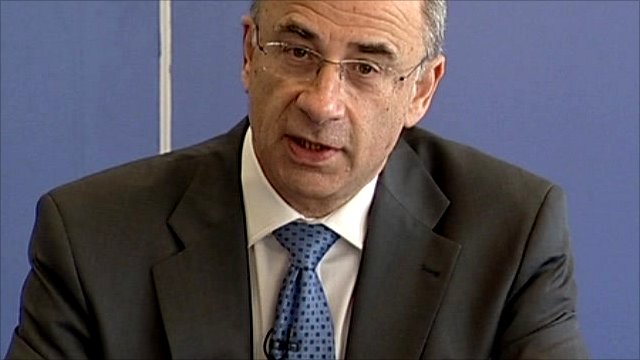 Lord Justice Leveson today outlined the procedures and time-scale for his Inquiry into the culture, practices and ethics of the press in connection with its relationships with the public, the police and politicians. He made a short “Opening Statement”, part of which can be seen on the clip at the bottom of this post. Continue reading
 The present proposals by the MOJ to abolish the recovery by successful claimants of the success fees on “no win no fee” libel and privacy cases and the recovery of “After The Event” (ATE) insurance premiums represents a damaging and dangerous attack on access to justice for ordinary citizens of modest means. Continue reading
 We reported last month that on 14 February 2011, controversial Federal Judge Judge Manuel Real dismissed the libel action brought by David Beckham against Bauer Publishhing Company Limited as the publishers of “In Touch” magazine. The order made by the judge is here. The claim arose out of the publication of an article entitled “David’s Dangerous Betrayal” which consisted of an interview with Irma Nici, described as a former high-class call girl, claiming that she had slept with David Beckham, who had agreed to pay her US$10,000 for “one night of passion”. Continue reading
 Snyder v. Phelps (09-751), 2 March 2011, United States Supreme Court. A recent decision of the United States Supreme Court, in which it upheld the rights of a radical anti-gay Christian group to protest at military funerals, provides a useful opportunity to compare free speech protections here to those provided over the pond. Continue reading

 Could libel reform have a damaging impact on the public’s access to justice? This was one of the key questions to emerge last night from ‘Libel Reform: in the public’s interest?’, a public debate organised by Gray’s Inn in association with the Media Standards Trust and INFORRM. Continue reading
 The Inforrm blog is taking a winter break for a couple of weeks. We thank all our readers and contributors who over the past 11 months have made this one of the leading media law blogs. Continue reading
 Last week we had a post listing the top twenty Inforrm blog posts of all time. This enabled newer readers to revisit some of the popular posts from earlier in the year. We have had a lot of hits on these and we thought it might be of interest to provide a further list, setting out some more of the most popular posts – this time numbers 20 to 40 on the Word Press List from our first 8 months. Continue reading
 One of the many useful features of the way in which WordPress blogs are set up is that automated records are kept of the blog posts which have had the most hits. We have extracted the list of the “Top 20 Inforrm” posts of all time. We post this so that new readers can visit some of the older, popular, posts on this list which they have missed. Continue reading
 In the second part of this four part post, Jonathan Coad considers the question of bias and the Press Complaints Commission and how it measures up to its own standards of being “fast, free and fair”.
You are walking down the street and a burly policeman jumps on you and beats you up for no reason. You take exception to this and make a complaint against the policeman. Imagine being told that your assailant has insisted that your complaint of assault is to be adjudicated by a body set up and funded by the police, where the relevant law has been written by the police and where nearly half of the adjudicating panel are serving police officers, most of whom themselves have a well documented record for such crimes. The same body also campaigns for ever greater liberty for the police to act in a way which infringes the rights of the individual without legal liability. So it is with complaints to the PCC.

Recent Judgments

© 2026 Inforrm's Blog
Theme by Anders Norén — Up ↑