 It was reported yesterday afternoon that the phone hacking case is now in the hands the Crown Prosecution Service which is considering its charging decisions. Cases involving four journalists and seven others have been referred to the CPS which issued a statement confirming receipt of the following: Continue reading
The International Forum for Responsible Media Blog
Month: April 2012 (Page 3 of 5)
 Our attention has been drawn to a new book, “Privacy Injunctions and the Media: A Practice Manual” by Iain Goldrein QC. This is intended to be a practical manual that details how to argue a case and contains check-lists and quality control protocols. It aims to sets out the law relating to privacy injunctions, and best practice in relation to seeking or opposing this form of relief. Continue reading
 The Supreme Court of Canada today released two decisions regarding assumed jurisdiction in defamation matters that leave the door to libel tourism wide-open in Canada. The two cases – Éditions Écosociété Inc. v. Banro Corp., 2012 SCC 18 and Breeden v. Black, 2012 SCC 19 – involve defamation suits commenced in Ontario against non-resident defendants. Continue reading
 The full judgment in the libel case of McGrath v Dawkins which was handed down on 30 March 2012 is now available ([2012] EWHC B3 (QB)). The claims was brought against an atheist blogger in respect of reviews on Amazon.co.uk and on an internet forum said to be run by a UK body, the Richard Dawkins Foundation for Reason and Science. It has attracted widespread comment on the internet as an example of an abusive libel action (see for example, this post on the Ministry of Truth blog). Continue reading
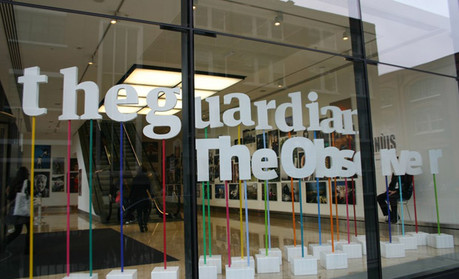 The case of R (Guardian News and Media Limited) v City of Westminster Magistrates’ Court ([2012] EWCA Civ 420) is a landmark decision for open justice and the media’s ability to access court documents. Drawing on a broad survey of domestic, European and international materials, the Court of Appeal overturned the Administrative Court and upheld the existence of an inherent common law power to order disclosure of documents which have been placed before a judge and referred to in open proceedings. Continue reading
 The Leveson Inquiry and Parliament are still on Easter vacation and the new legal term begins on Tuesday 17 April, but there is no shortage of news and commentary to report, following Inforrm’s own mini-break from our usual weekly round up. Continue reading
 The Commons media select committee is coming under increasing pressure to tone down its report into phone hacking for fear that it might prejudice potential trials stemming from the scandal.
The attorney general, Dominic Grieve, will meet with members of the committee on Monday and it is understood he will talk to them about the issue of contempt of court and the possibility that their report may cause prosecutions to be abandoned because of prejudicial pre-publicity. Continue reading
 In its decision in Gillberg v Sweden the Grand Chamber of the European Court has, more firmly than the 2010 judgment of the Third Section, confirmed that Swedish professor, Christopher Gillberg (pictured right) could not rely on his right of privacy under Article 8, nor on his (negative) right to freedom of expression and information under Article 10 of the Convention to justify his refusal to give access to research material at Gothenburg University (see comment on Chamber judgment here). The Court unanimously concluded that the criminal conviction of the professor for not giving access to the requested documents did not affect his rights under Article 8 and 10 of the Convention. Most importantly, the Grand Chamber also referred under Article 10 of the Convention to the right “to receive information in the form of access to the public documents” ([93] and [94]). Continue reading
 After a number of high profile prosecutions, most people are now aware that what you say online can have serious consequences. Cases involving racist and offensive comments on Twitter have reminded people that several criminal offences can regulate such expression. The most prominent of the cases, the conviction of Liam Stacey under s.4A of the Public Order Act 1986, has provoked the most debate, largely about severity of his sentence. In a recent comment piece, Victoria Coren makes a different point and asks whether s.4A is applicable in such a case, given that the statute provides an exception for communications where the sender and recipient are inside a dwelling. Continue reading
 Scathing attacks upon the judiciary are not uncommon. Contempt proceedings against the authors of such attacks are far less frequent. In a remarkable recent development, the Attorney General for Northern Ireland has been granted leave to prosecute Peter Hain MP for the arcane offence of “scandalising the court”. The move has important implications for free speech in relation to court proceedings and judicial matters. It also raises sensitive issues about the relationship between the judiciary, politicians and the press – a relationship currently under intense scrutiny in Parliament and at the Leveson Inquiry. Continue reading

Recent Judgments
© 2026 Inforrm's Blog
Theme by Anders Norén — Up ↑