 The disclosure by the London Mayoral candidates of their tax returns has led to a wider debate about tax disclosure by politicians. The Chancellor, George Osborne, has said he would be “very happy” for the government to consider publishing the personal tax returns of senior cabinet ministers. The Prime Minister has said he is “very relaxed” about publishing his tax returns and believes the “time is coming” for politicians to be more open about their personal finances. Continue reading
The International Forum for Responsible Media Blog
Month: April 2012 (Page 4 of 5)

Mark Pea rson’s new book Blogging & Tweeting Without Getting Sued: A global guide to the law for anyone writing online – is very accessible guide to laws relevant to the all those writing online. Continue reading
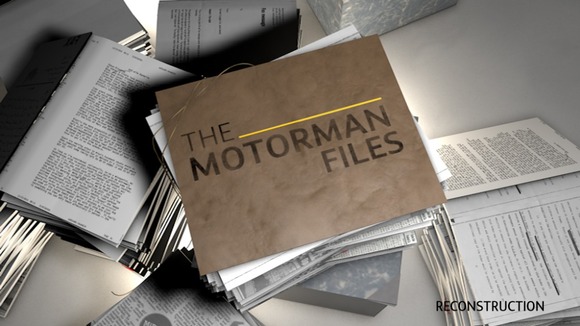 The Information Commissioner, Christopher Graham, is angry about the publication on the Guido Fawkes blog of part of the Motorman files (see this statement from the ICO). What he doesn’t say, because no reasonable person could make such a claim, is that he is surprised that this has happened.
Plenty of people have gained access to this information over the past nine years. In and around the Leveson Inquiry the Motorman files are an open secret, with lawyers at public hearings able to question witnesses on the content (though normally without revealing anything substantive to the public). Continue reading
 A little while ago, I argued that liberty, democracy and the rule of law together constitute the constitutional trinity on which many modern states are founded, and that, not only are there the traditionally understood strong liberal and democratic justifications for freedom of expression, there are also equally strong free speech justifications founded in the rule of law. In last week’s decision in R (on the application of Guardian News and Media Ltd) v City of Westminster Magistrates’ Court [2012] EWCA Civ 420 (03 April 2012), the Court of Appeal for England and Wales made this point in rhetoric of great eloquence, perspicuity and vigour (though the judgments are curiously ambivalent in their ambit and ambition). Continue reading
 Module two of the Leveson Inquiry, examining the relationship between the police and the press, drew to a close this week with evidence from the former and current Director of Public Prosecutions, and former News of the World employees Lucy Panton and Neil Wallis. Continue reading
 The Inforrm blog is taking a break from regular posting over Easter. The English law courts are closed until 17 April 2012, Parliament is not sitting again until 26 April 2012. The Leveson Inquiry is not sitting until “Module 3” begins on 23 April 2012. Our break will be the shortest – we will have our next “Law and Media Round up” on 16 April 2012. Continue reading
 The New Yorker’s recent long profile of the Daily Mail contained a passing reference to something that may be worthy of a little more attention than it has received. Noting that the editor of the Mail on Sunday, Peter Wright, had stepped down, writer Lauren Collins observed: Continue reading
 On 4 April 2012 the first “legal term” of 2012 (the “Hilary term”) came to an end. The High Court, Court of Appeal and Supreme Court will resume sittings on 17 April 2012 (the “Easter term”). We thought that it would be interesting to have brief review of the media law judgments of the past 3 months (the term started on 11 January 2012). Continue reading
 There is no need for statutory media regulation because there are a whole range of statutory controls that presently exist, Lord Hunt of Wirral said at the launch of the new edition of McNae’s Essential Law for Journalists last Friday.
Additionally, judges can fill gaps through case law, said Hunt, chair of the Press Complaints Commission. “You do have in decided cases the ability to fill gaps and we’ve seen that with some of the recent judgments of Mr Justice Tugendhat and before that David Eady. Therefore, what is the need for anything more? That is where my case rests.” Continue reading
 There is news today in relation to three appeals in libel cases. First, the Court of Appeal (Pill and Elias LJJ and Sharp J) handed down judgment in the case of Ashcroft v Foley ([2012] EWCA Civ 423). This arises in a libel action against the “Independent”. The Court of Appeal unanimously dismissed the defendants’ appeals against orders of Eady J striking out defences of justification and fair comment and subsequently refusing permission to amend. Continue reading

Recent Judgments

© 2026 Inforrm's Blog
Theme by Anders Norén — Up ↑