 The latest issue of the Index on Censorship magazine is entitled “Privacy is Dead! Long live privacy” and includes an interview with Mr Justice Eady, conducted by the veteran legal commentator Joshua Rozenberg entitled “Balancing Acts“. This is a rare example of an interview with a serving judge. It was conducted on 11 April 2011 – before heat was turned up in the “Superinjunction Spring”. Despite the worst efforts of the “Sunday Times” – of which more in a moment – the interview contains few surprises for those who have taken the trouble to read Mr Justice Eady’s judgments (and lectures) on the subject of privacy. Continue reading
The International Forum for Responsible Media Blog
Month: June 2011 (Page 3 of 4)
 In this regular feature we draw attention to the last week’s law and media news and next week’s upcoming events. If readers have any news or events which they would like to draw attention to please add them by way of comments on this post.
News
We begin with two statements in open court by News Group Newspapers in the past week – one in a libel case and the other in relation to “phone hacking. The first Continue reading
 The readers of this blog will be well aware of the current furore surrounding privacy injunctions and the one sided reporting they attract in the media.
Chief amongst the privacy bashers are the Sun and the Daily Mail with their headlines wailing against the use of so-called ‘super-injunctions’. The common theme being that the “rich and the famous” block up the Courts time with applications for injunctions which in turn “gag” the press and suppress their freedom of expression. It would appear however that the newspapers themselves may be to blame for a large amount of this wasted time and expense. Continue reading
 At the centre of the recent media furore about so-called super injunctions and anonymity, the social networking site Twitter has been successfully used to get around High Court injunctions. The tabloid media have always had ways of outing a private story but the use of Twitter exposes not only irony but also misconceptions that US internet companies are immune from UK or EU law. Continue reading
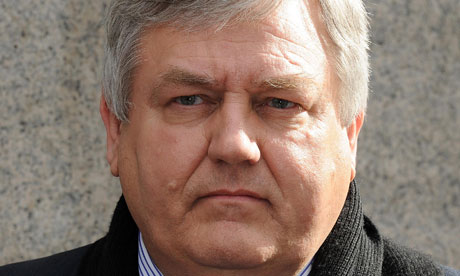 The phone hacking investigation continues to expand in new directions. In March 2011, the Guardian had a report about the private investigator Jonathan Rees (pictured right) who had been paid £150,000 a year by the “News of the World” and was said to have obtained information from corrupt and illegal sources. Continue reading
 Public figures are routinely berated in the pages of tabloid newspapers and gossip magazines for lapses in moral judgement. Academic Robin Barnes fights their corner, arguing that it is today’s celebrities who are caught in a morality-free zone constructed by the media, one which allows them to be routinely subject to stalking, harassment, invasion of privacy and defamation. In her words, the lives of celebrities are served up to us at a “tabloid-style buffet”. Continue reading
 The Canadian Media Lawyers Association has submitted comments to the Joint Committee considering the draft Defamation Bill (the Submission can be read here) While Canadian and English defamation law is similar in many ways, Canada has gone in its own direction on some of the issues raised in the Bill, such as the defence of fair comment, responsible communication, and an explicit recognition of the reportage defence. These differences highlight some of the concerns raised by the Bill. Further, Canada’s recent defamation jurisprudence is now, finally, grappling with reaching a better balance between protection of reputation and freedom of expression under the Canadian Charter of Rights and Freedoms, which may be of particular relevance in England as its courts also strive to achieve an appropriate balance between these competing constitutional rights under the Human Rights Act. Continue reading
 ‘First injunction specifically bans Twitter and Facebook’ read a much-tweeted headline in the midst of England’s Superinjunction Spring.
Naturally, the judge’s explicit ban of publication of information on Twitter and Facebook attracted a lot of attention on those platforms; and technology bloggers, as well as the mainstream press, were quick to report this apparent legal first for the English courts. Continue reading
 This Friday 10 June 2011, the Council of Europe (CoE) Commissioner for Human Rights, Thomas Hammarberg, will be speaking at the Free Word Centre about the importance of freedom of expression and the media for the protection of all other human rights. The event is hosted by the CoE, ARTICLE 19 and the London Metropolitan University. Continue reading
 The total number of Inforrm page views yesterday reached 500,000 – 17 months after our launch. During the same period we had slightly over 160,000 visits to the blog from all over the world. Thank you to all our readers for following the blog, to all our contributors and to everyone who has made positive comments since our launch. Continue reading

Recent Judgments
© 2026 Inforrm's Blog
Theme by Anders Norén — Up ↑