 Only a few weeks after the Strasbourg Court’s judgment in the case of Ashby Donald and others v. France (ECtHR 10 January 2013, see our Inforrm post here) the Court of has decided a new case of conflicting rights between copyright and freedom of expression. The case of Fredrik Neij and Peter Sunde Kolmisoppi (The Pirate Bay) v. Sweden, Appl. nr. 40397/12 concerned the complaint by two of the co-founders of “The Pirate Bay”, that their conviction for complicity to commit crimes in violation of the Copyright Act had breached their freedom of expression and information.
The International Forum for Responsible Media Blog
Month: March 2013 (Page 3 of 6)
 As one would expect, the subject of applying regulation to the internet, has come under particular scrutiny from the online community as a result of proposals contained in the draft Royal Charter on self-regulation of the press and amendments to the Crime and Courts Bill. On the whole they have been criticised as an unwarranted extension which will have a “chilling effect” on internet publishers. Is this an accurate assessment of the proposals? Continue reading
 The introduction by the cross party agreement of statutory provisions supporting a Royal Charter setting up a “Recognition Panel” (see our post here) has led, once again, to complaints that any political involvement in press regulation – however indirect – is incompatible with press freedom. For example, the Chief Executive of Index on Censorship, Kirsty Hughes, has argued that
 Continue reading
 There may be no typical cases in this area of the law, but Thompson v James epitomised the controversy which can surround libel litigation. The protracted and bitter nature of the dispute, the Claimant’s focus on local government transparency, and the issue of access to Council proceedings all made the action a subject of concern to a range of vociferous interest groups in the print media and online. Continue reading
 The first phase of the process of implementation of the Report of Lord Justice Leveson has ended with cross-party agreement on the setting up of the “recognition body” and the accompanying incentives. The parties have agreed to establish the “recognition panel” by Royal Charter [pdf]. Continue reading
 The Defamation Bill is presently in a twilight zone between the House of Lords and the House of Commons. It is being held up by the presence of the so-called “Puttnam Amendment” (clause 2). This problem is likely to be resolved today with cross-party agreement on the implementation of Lord Justice Leveson’s recommendations. Continue reading
 Four current or former Mirror journalists were arrested last week by Metropolitan police officers on suspicion of conspiracy to hack mobile telephones, as Inforrm reported here. Those arrested were named as James Scott, editor of the People, Nick Buckley, deputy editor of the People, Tina Weaver, former Sunday Mirror editor, and Mark Thomas, former deputy editor of the Sunday Mirror. This was the first time the Mirror Group was brought into the phone hacking investigation. Continue reading
As we reported on Friday , the Expert Group on Leveson established by the First Minister, Alex Salmond, recommended a statutory recognition body, a regulator with jurisdiction over all publishers in Scotland and a “failsafe”. There is a BBC report about these recommendations, “McCluskey Report recommends legal press regulation in Scotland“. Continue reading
 Eon v France, no. 26118/10 14 March 2013- read judgment (in French only). The applicant, Hervé Eon, is a French national, a socialist and anti-GM activist living Laval (France). The case concerned his conviction for insulting President Sarkozy.
During a visit by the President to the département of Mayenne on 28 August 2008, Mr Eon had waved a placard reading “Casse toi pov’con” (“Get lost, you sad prick”), a phrase uttered by the President himself several months previously when a farmer had refused to shake his hand at the International Agricultural Show. The utterance was widely disseminated in the media and on the internet, attaining the status of a slogan. Continue reading
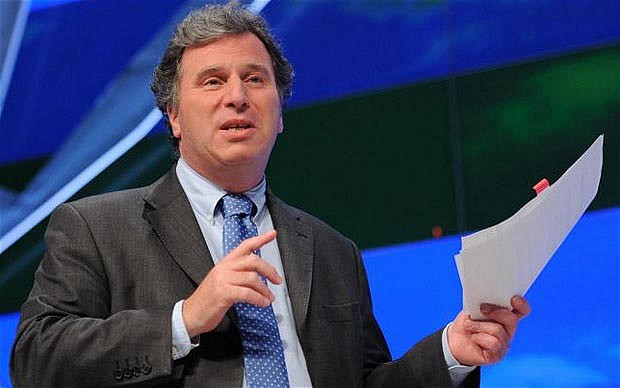 Here’s a paradox: with vital votes due in Parliament on Monday, the people who run our biggest national newspapers are backing a press regulation system in which serving cabinet ministers would have a legal right to meddle whenever they liked. Continue reading

Recent Judgments

© 2026 Inforrm's Blog
Theme by Anders Norén — Up ↑