 Michael Simkins LLP is a leading media and commercial law firm. Across our practice, we have an outstanding reputation for providing high-quality, responsive advice delivered by experienced and talented individuals who truly understand their clients’ needs. Continue reading
The International Forum for Responsible Media Blog
Month: March 2013 (Page 2 of 6)
 Last week’s round up came just ahead of the announcement that all three parties had come to an agreement on a Royal Charter [PDF] with accompanying statute. Provisions relating to costs and exemplary damages were inserted into the Crime and Courts Bill, which will be considered by the House of Lords this week (see “In Parliament” below). An amendment was made to the Enterprise and Regulatory Reform Bill to protect certain future Royal Charters against being changed by the Privy Council without Parliamentary approval. Continue reading
 In a recent post on the Head of Legal blog, I said I was worried that the press self-regulation scheme agreed by the main political parties (and to be underpinned by a Royal Charter and two pieces of legislation) would not offer bloggers what it offers the press. Let me explain my worries – and why I think every type of blog should be included. Continue reading
 Lawyers for Media Standards (LMS), a lobbying group that was formed to inject balance into the debate around reforming libel laws, has issued the following press release expressing serious concerns about the proposed arbitration scheme sought to be implemented by Royal Charter, ahead of the planned House of Lords debate on press regulation on Monday 25 March 2013. Continue reading
 Journalism in ‘the public interest’ is central to a healthy democracy but extremely hard to define and police. At present it has an ambiguous legal status; recognised by law but not enshrined in it. The ‘public interest’ is often (successfully) used as a defence by journalists for publishing stories or doing things which are technically illegal. Yet this protection relies on the discretion of judges and the CPS and is not underpinned in statute. Continue reading
 British journalists have long looked with envy on the First Amendment to the Constitution of the United States. Adopted in 1791, this states: Congress shall make no law respecting an establishment of religion, or prohibiting the free exercise thereof; or abridging the freedom of speech, or of the press; or the right of the people peaceably to assemble, and to petition the Government for a redress of grievances. Continue reading
 On 19 March 2013 primary school teacher Lucy Meadows was found dead at her home. She is believed to have killed herself. The precise circumstances will not be be known until the inquest into her death. But we do know that she was monstered by tabloid newspapers when the news emerged that she was transitioning from male to female. Continue reading
 The media continue to seek to resist Lord Justice Leveson’s proposals for the self-regulation of the press by appeals to their “human rights”. A number of legal opinions opposing the proposals have been leaked to the press although, as far as I am aware, none have in fact been published. Whilst it is good to see that the Daily Mail and the Daily Telegraph have become converts to the value of the European Convention on Human Rights, these claims do not – on analysis – undermine the Leveson proposals.
Continue reading
 Comparing different countries’ legal systems is a dangerous game, but three cases came to light last week which beg to be compared. The criminalisation of criticising political leaders has always been a hallmark of illiberal societies, and it seems that the tradition is still going strong today: in France, the West Bank and the UK too.
First, the European Court of Human Rights ruled that a man should not have been convicted of a criminal offence for waving a placard at (as he was then) President Sarkozy reading “Casse toi pov’con” (“Get lost, you sad prick”). Continue reading
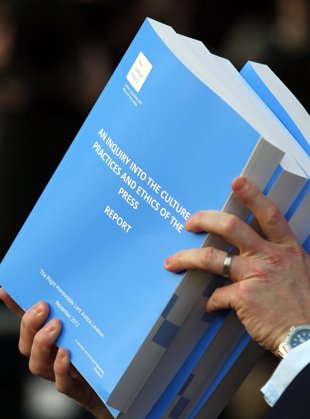 A lot has been written in recent days about the proposed new clauses to go into the Crime and Courts Bill, which is due to be debated in the Lords on Monday, on exemplary damages and costs. The content and import of these clauses are very worrying and pose some serious threats to free speech. Continue reading

Recent Judgments

© 2026 Inforrm's Blog
Theme by Anders Norén — Up ↑