 The government has published its Legal Aid, Sentencing, and Punishment of Offenders Bill, which includes reforms to civil litigation costs, in particular to Conditional Fee Agreements or ‘No Win No Fee’. Continue reading
The International Forum for Responsible Media Blog
Month: June 2011 (Page 2 of 4)
 The right to freedom of speech ought to be unfettered unless it is deployed in such a way as to cause unwarranted harm.
The core principle underpinning defamation law is that the law will provide a remedy where a claimant has been caused unwarranted harm by the publication of false information. Continue reading
 A voluntary but binding libel arbitration process has been launched by the retired High Court judge Sir Charles Gray and the former legal manager of the Times and Sunday Times, Alastair Brett.
The Early Resolution scheme, which will be officially launched to lawyers on Tuesday 21 June, offers parties an alternative to High Court proceedings. Continue reading
 In this regular feature we draw attention to the last week’s law and media news and next week’s upcoming events. If readers have any news or events which they would like to draw attention to please add them by way of comments on this post.
News
Tomorrow’s onset of summer reminds us that the Superinjunction Spring is drawing to a close – with no privacy injunction applications for over a month. We will begin with libel and, unusually, in Scotland where a remarkable settlement was announced. The “News of the World” has paid libel
Continue reading
 The arrest of the leading French politician and Dominique Strauss-Kahn on a rape charge in the US provided the English press with a heaven sent opportunity to attack the law of privacy. A representative example was Stephen Glover’s piece in the “Daily Mail”‘ “A sexual satyr, a conspiracy of silence and why we must NEVER have privacy laws like the French“. Continue reading
 Phone hacking was once a secret, surreptitious activity, carried on by private investigators and journalists, using secret techniques to access the voicemail of unsuspecting victims. Even when the story first broke it was long confined to the pages of the “Guardian” and, later, the “Independent” and the “Financial Times”. It is now clear that it will not go away. More victims come to light almost every day. On Monday 13 June 2011 the footballer Ryan Giggs commenced proceedings against the New of the World. Continue reading
 Sir Stephen Sedley, recently retired from the Court of Appeal, has written a fascinating piece on the “Superinjunction Spring” in the most recent issue of the London Review of Books. Entitled the “Goodwin and Giggs Show” it highlights, in particular, the important constitutional issues arising from the “May Events”. This is the first analysis of these issues from a judicial perspective and should be Continue reading
 Sensationalised articles concerning gangland crime populate tabloid pages in Ireland, even more so than celebrity scandals. Chronicling criminals has been glamorised by journalists such as Paul Williams whose articles satiate the public’s morbid thirst for scoops on the criminal underworld. However, while some nefarious individuals or Continue reading
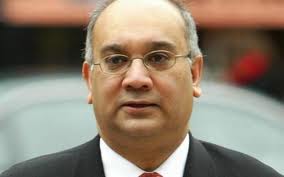 Yesterday three representative of the mobile phone companies gave evidence to the Home Affairs Select Committee, chaired by Keith Vaz MP.
They explained that they were first contacted in December 2005 about one potential hacking victim (presumably a member of the Royal Household) and later in 2006 were provided by the police with a list of suspect telephone numbers. Continue reading
 On 9 June 2011 Mr Justice Tugendhat handed down judgment in the case of Goodwin v News Group Newspapers (No.3) ([2011] EWHC 1437 (QB)). This is the latest decision relating to the privacy injunction originally obtained on 1 March 2011 by Sir Fred Goodwin to prevent the publication of stories about an alleged affair. A public judgment was given at the time in anonymised form (MNB v News Group Newspapers [2011] EWHC 528 (QB)). On 19 May 2011, following a question in the House of Lords which identified him and the information in issue, Sir Fred Goodwin agreed to the removal of his anonymity (see [2011] EWHC 1309 (QB)). Continue reading

Recent Judgments

© 2026 Inforrm's Blog
Theme by Anders Norén — Up ↑