The International Forum for Responsible Media Blog

Month: January 2011 (Page 6 of 6)

Case Law: “Clift v Slough Borough Council – Qualified Privilege meets Article 8” – Lorna Skinner and Edward Craven

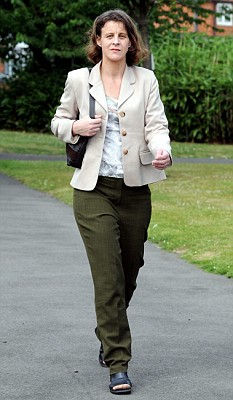
Jane Clift

The influence of Article 8 of the European Convention on Human Rights on the law of breach of confidence and the development of a domestic tort of “misuse of private information” has been well documented. By contrast, the influence of Article 8 upon the law of defamation has been much less pronounced. Just before the Christmas break, however, the Court of Appeal handed down judgment in Clift v Slough Borough Council ([2010] EWCA Civ 1484). In Clift the Court of Appeal grappled with the issue of how, if at all, the Human Rights Act 1998 (“HRA”) has affected the availability of the defence of qualified privilege to public authorities in defamation cases. Continue reading


Opinion: “What’s to stop the press ‘monstering’ the next Jo Yeates suspect?” – Martin Moore

Christopher Jefferies, arrested last week and questioned about the murder of Bristol landscape architect Jo Yeates, expects to be cleared of any involvement in her murder within days, it has been reported. The police can find no evidence or motive connecting him to her murder.

Yet only a week ago, as soon as he was arrested, Jefferies was presumed guilty by many media outlets. ‘Weird, posh, lewd, creepy’, The Sun called him, before quoting Continue reading

Opinion: “Freedom is too fragile to leave to zealots” – Ken Macdonald QC

Julian Assange fails to see that his headlong pursuit of openness leaves no room for discretion and morality

Julian Assange has been standing in an open, snowy field in Suffolk bitterly complaining about … leaks. This is not a joke; indeed he appears to be whingeing with a straight, hollow and wind-chilled face, all pink around the ears, steam in his nostrils and entirely without irony. Continue reading

Inforrm Media Law Quiz of the Year – 2010

In order to lighten the burden of the New Year return to work the Inforrm editorial team has prepared a “Media Law Quiz of the Year” for 2010.  And there is prize – a copy of  Privacy and Freedom of Expression by R Clayton and H Tomlinson (OUP, 2010) – kindly donated by the authors.  Answers should be submitted to Inforrm by Email (to inforrmeditorial@gmail.com) by 12 January 2010.  The editors’ decision on all matters relating to the quiz is final.  Continue reading

Media Responsibility and Chris Jeffries

The murder of Joanna Yeates over Christmas has, understandably, attracted massive media coverage.  Professor David Wilson, of Birmingham City University told the “Guardian” that as far as the media was concerned, Ms Yeates – white, female and professional – was an “ideal victim”. “Yeates’s professional and personal life immediately had resonance with people watching television or reading newspapers.”  Unfortunately, her landlord, Mr Chris Jeffries, seems to have been the “ideal suspect”. Continue reading

Defamation Trials, Summary Determinations and Assessments 2010 [updated]

Libel defendants had a good year in 2010.  There were 21 defamation hearings before High Court Judges which resulted in the final disposal of libel actions.  The defendants were successful in 17 of these cases, that is 81% of the total.   In three of the four cases in which the claimant was successful – Bryce, Ernst & Young and Metropolitan Schools –  the defendant did not appear.  In the fourth (Berezovsky) the media defendant did not appear and the individual defendant was in person.  Continue reading

US Freedom of Expression and Media Round Up – 1 January 2011

Our last US Round Up was on 20 October 2010.  We apologise for this delay. In this post we will try and deal with the major developments in freedom of expression and media law in the United States over the past two months.

On 2 November 2010 The US Supreme Court heard argument in Schwarzenegger v Entertainment Merchants (Docket 08-1448) the Court considered the issue as to whether a state law restricting the sale of violent video games to minors violated the First Amendment right to free speech.   Continue reading

Newer posts »

© 2026 Inforrm's Blog

Theme by Anders NorénUp ↑