 At first blush, the two most recent libel cases in which the question of serious harm has been tested, yielded contradictory findings. Both cases were argued on the same day before different Judges at separate trials of preliminary issues. In Theedom v Nourish Training Ltd ([2015] EWHC 3769 (QB)) the court found that the Claimant had satisfied the threshold test of s.1 Defamation Act 2013. In Alvaro Sobrinho v Impresa Publishing SA ([2016] EWHC 66 (QB)) the court found that the threshold test had not been met and further, that the claim was an abuse of process. Continue reading
The International Forum for Responsible Media Blog
Tag: Serious Harm (Page 3 of 3)
 In his recent decision in Lachaux v Independent Print ([2015] EWHC 2242 (QB)) Mr Justice Warby considered a number of procedural matters which arise in defamation cases where there is an issue as to whether there has been “serious harm to reputation” as required by section 1 of the Defamation Act 2013. Continue reading
 In the case of Lachaux v Independent Print ([2015] EWHC 2242 (QB)) Warby J gave judgement on preliminary issues, including an issue relating to “serious harm”, in a number of libel actions brought against three newspapers and the Huffington Post. He agreed with the analysis of “serious harm” in the earlier cases – damage to reputation must be proved and cannot be presumed. He nevertheless went on to find that there was, in fact, serious harm in relation to four of the five articles complained of. Continue reading
 The result of section 1 of the Defamation Act 2013 is that a claimant in a defamation case must now establish that a publication “has caused or is likely to cause” serious harm to his or her reputation. A common law damage was presumed and the proof of the existence of serious harm is potentially a difficult hurdle for a claimant to overcome. The standard defendant response to a letter before action now usually involves a demand that the claimant identifies evidence of serious harm. Continue reading
 The preliminary issues agreed by the parties in Cooke v MGN ([2014] EMLR 31) and directed by the Master, which came before Bean J, envisaged two issues being determined sequentially: (1) whether the words complained of bore the meanings alleged by the Claimants or any other meaning that (subject to serious harm) was defamatory of them and, if so, what meaning; and (2) whether the publication of those words had caused or were likely to cause serious harm to the Claimants’ reputations within the meaning of section 1. Continue reading
It is still very early days for section 1(1) of the Defamation Act 2013, which is likely to be a source of uncertainty for practitioners while decisions clarifying its application are awaited from specialist defamation judges and the appeal courts. This may well be having a chilling effect on potential claimants owing to the costs risks attaching to the testing of new legal boundaries. Continue reading
 On 13 August 2014 Mr Justice Bean handed down his judgment in the case of Cooke v MGN ([2014] EWHC 2831 (QB)). This was the first case in which the requirement for ‘serious harm’, as newly prescribed by the Defamation Act 2013 (the “2013 Act”), was considered. Continue reading
 Judgment was handed down today by Mr Justice Bean in the libel case of Cooke and Anor v MGN ([2014] EWHC 2831 (QB)). The judgment follows the trial of two preliminary issues in the case: the meaning of the words complained of; and, most significantly, whether either or both of the publications complained of reached the “raised threshold” of “serious harm” within the meaning of section 1 of the Defamation Act 2013 (“the 2013 Act”). Continue reading
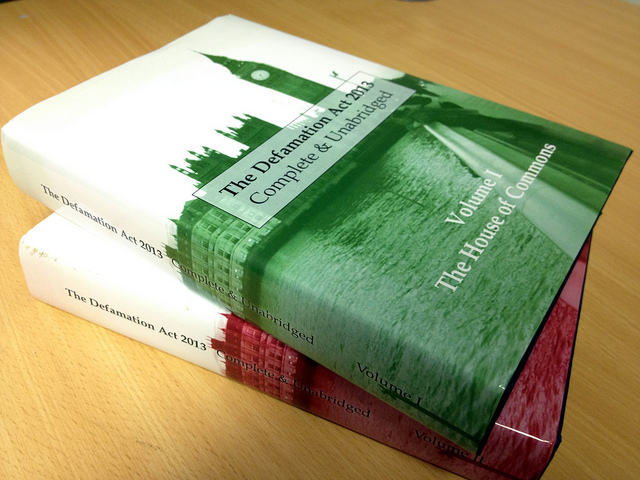 In this post, I continue setting out concerns with the Defamation Act 2013 by looking at the test for serious harm in section 1 of the Defamation Act 2013. There is no sensible objection to a seriousness threshold for a defamation claim. As the explanatory notes of the Act make clear, this is the current law. Continue reading

Recent Judgments

© 2026 Inforrm's Blog
Theme by Anders Norén — Up ↑