 The preliminary issues agreed by the parties in Cooke v MGN ([2014] EMLR 31) and directed by the Master, which came before Bean J, envisaged two issues being determined sequentially: (1) whether the words complained of bore the meanings alleged by the Claimants or any other meaning that (subject to serious harm) was defamatory of them and, if so, what meaning; and (2) whether the publication of those words had caused or were likely to cause serious harm to the Claimants’ reputations within the meaning of section 1. Continue reading
The International Forum for Responsible Media Blog
Tag: Defamation Act 2013 (Page 4 of 7)
It is still very early days for section 1(1) of the Defamation Act 2013, which is likely to be a source of uncertainty for practitioners while decisions clarifying its application are awaited from specialist defamation judges and the appeal courts. This may well be having a chilling effect on potential claimants owing to the costs risks attaching to the testing of new legal boundaries. Continue reading
 The Northern Ireland Law Commission is currently consulting on reforms to defamation law [pdf]. Many mooted reforms relate closely to those reflected in the Defamation Act 2013 (see Part 1). In addition, the NILC is consulting on the desirability of a further reform option. This would comprise two inter-related changes: first, the withdrawal of the “single meaning rule”, and secondly, the introduction of a bar to the bringing of claims where a publisher has corrected or retracted a possible meaning promptly and prominently. Continue reading
 While the Defamation Bill progressed through Parliament, neither the Scottish Parliament nor the Northern Ireland Assembly passed a consent motion to extend the legislation to those jurisdictions in full (the former did adopt sections 6 and 7 of the Act). Last week, the Scottish Law Commission announced that defamation would comprise one element of its ninth programme of law reform. The NI Law Commission has published a study of the law and is currently consulting on possible reforms [pdf]. The consultation closes on 20 February 2015. Continue reading
 It appears that, as a result of the recent decision in Cooke v MGN ([2014] EWHC 2831 (QB)), the Press may be able to escape the financial cost of defamation, and reap the financial reward, simply by issuing an early apology. This has serious implications for the new press regulatory body, the Independent Press Standards Organisation (“IPSO”), established this week. Continue reading
 Judgment was handed down today by Mr Justice Bean in the libel case of Cooke and Anor v MGN ([2014] EWHC 2831 (QB)). The judgment follows the trial of two preliminary issues in the case: the meaning of the words complained of; and, most significantly, whether either or both of the publications complained of reached the “raised threshold” of “serious harm” within the meaning of section 1 of the Defamation Act 2013 (“the 2013 Act”). Continue reading
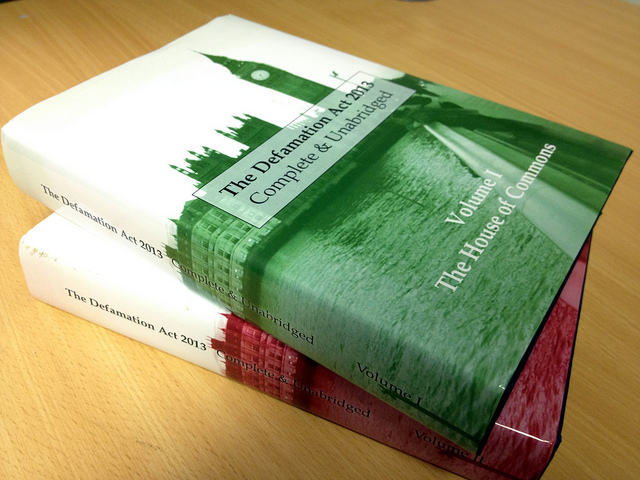 This is the fifth and final post in this series about the Defamation Act 2013. In earlier posts I have dealt with general concerns about the Defamation Act 2013, concerns about section 1, “Serious harm” and the new statutory defences of “truth” and “honest comment” and “public interest“. In this post, I conclude by looking at the new intermediary defences in section 5 and section 10. Continue reading
In earlier posts I have dealt with general concerns about the Defamation Act 2013, concerns about section 1, “Serious harm” and the new statutory defences of “truth” and “honest comment” in section 2 and section 3. In this post, I continue setting out concerns with the Defamation Act 2013 by looking at the public interest defence in section 4. Continue reading
In earlier posts I have dealt with general concerns about the Defamation Act 2013 and concerns about section 1, “Serious harm”. In this post, I will look at at the new statutory defences of “truth” and “honest opinion” which are set out section 2 and section 3. Continue reading
In this post, I continue setting out concerns with the Defamation Act 2013 by looking at the test for serious harm in section 1 of the Defamation Act 2013. There is no sensible objection to a seriousness threshold for a defamation claim. As the explanatory notes of the Act make clear, this is the current law. Continue reading

Recent Judgments

© 2026 Inforrm's Blog
Theme by Anders Norén — Up ↑