The International Forum for Responsible Media Blog

Month: December 2011 (Page 3 of 4)

Future press regulation must recognise multi-platform content – Lara Fielden

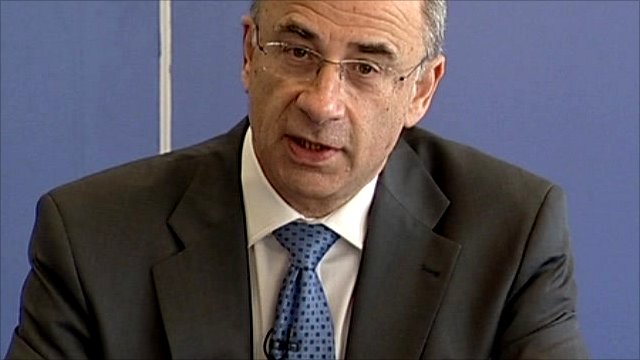
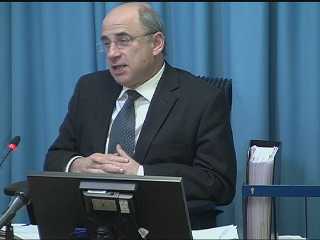
Who are the press? What is the media? What defines journalists? These are questions Lord Justice Leveson will have to address before he can move on to consider questions of press regulation.

How do we identify the press when it’s not just in print but online? Where are the boundaries between “traditional” and “citizen” journalism? What differentiates the broadcast, print and online worlds of the media now that they all provide video and text based content across PCs, smart phones, tablet devices and, shortly, internet-connected televisions? Continue reading
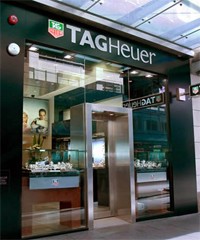
Case Law, New South Wales: LVMH Watch & Jewellery Australia Pty Limited v Michael Lassanah & Aaron Oddie – police win privilege appeal

On 28 November 2011 the New South Wales Court of Appeal determined that defamatory statements uttered by police doing their work are protected by both forms of qualified privilege – statutory and common law ([2011] NSWCA 370).   In a case which involved police officers uttering defamatory statements the Court of Appeal upheld both forms of qualified privilege and held that there was no evidence that they were motivated by malice.  As a result, the defendant’s appeal was allowed. Continue reading

The Leveson Inquiry – The Legitimacy Challenge – Damian Tambini

Lord Justice Leveson was thrown what in rugby is called a ‘hospital pass’. This is one that you receive just as several large, powerful – and ruthless – bodies are bearing down on you from different directions. So far, Leveson is proving adept at avoiding serious damage as he negotiates the politics and procedure. But as he does so it is worth standing back from the cut and thrust to ask where the Inquiry is in procedural terms, where it is going, and whether the inquiry itself is likely to end up as a casualty. Continue reading

Should Journalists have privileges? Part Two, Accreditation and Privileged Access – Hugh Tomlinson QC

The distinction between journalist and citizen is one which is becoming increasingly blurred.  In the first part of this post I argued that despite the rise of the “citizen journalist” the law cannot sensibly extend “journalistic privileges” to everyone who is writing or investigating for possible publication.  In other words, a sub-category of those writing for publication – “accredited journalists” – should be given specific privileges to assist them in their work. Continue reading

Self-Regulation and the Press Council – Louis Blom-Cooper on the lessons of the 1980s

In a fascinating piece in the latest Index on Censorship magazine, Julian Petley suggests that the Leveson Inquiry represents a “twice in a lifetime opportunity to reform the behaviour of the press and the manner in which it is regulated“.  “Twice in a lifetime” because, we have “been there before” in the 1980s.  At that time, the excessive behaviour of the popular press led to a number of private members bills and debate on press standards. Continue reading

Law and Media Round Up – 5 December 2011

British and global media maintained its interest in the Leveson Inquiry for another week, following evidence by Chris Jefferies, Charlotte Church, Anne Diamond, former News of the World journalist Paul McMullan and Alastair Campbell.  The Inquiry also heard from Alexander Owens, former ICO senior investigating officer who claimed the former deputy head of the ICO refused to pursue media organisations over the illegal purchase of confidential information because they were “too big“.  Owen’s evidence can be found at this link. Continue reading

News: Leveson Inquiry – Evidence, Weeks 1 and 2 – a crash course on the ways of the tabloids

Over the past two weeks the Leveson Inquiry has heard seven days of evidence from a remarkable range of witnesses.  Twenty were “victims” – of phone hacking, media intrusion or both.  Of these nine were “celebrities” – such as Hugh Grant, Sienna Miller and JK Rowling. Eleven were “ordinary” victims – individuals who were not in the public eye before press intrusion or hacking began – these included the Dowlers, the McCanns, the Watsons and Chris Jeffries.  Continue reading

News: Defamation in Israel – are the proposed amendments to the law objectionable?

In Israel the Knesset has been considering a bill amending the Libel Law that critics say could muzzle the country’s media if it becomes law. The Defamation Bill was given a first reading on 21 November 2011 by 42 votes to 31 after a heated debate.  It has been extremely controversial in Israel and has attracted adverse comment internationally.  It is difficult to see why. Continue reading

Opinion: “Leveson: it’s all really about privacy (so start with that)” – George Brock

I blame the Leveson Inquiry’s terms of reference. These ask the inquiry to recommend “a new more effective policy and regulatory regime which supports the integrity and freedom of the press”. No sooner were these words published than editors, pundits, publishers and media lawyers plunged with joyful relish into the business of elaborating “options” for toughening the powers and operation of the existing regulator, the Press Complaints Commission. The idea that the phrasing of the terms of reference is open ended, and doesn’t necessarily imply even the continuation of any self-regulatory or independent regulation, seemed not to occur to anyone at the seminars which Leveson organised as the overture to the formal hearings. Continue reading

« Older posts Newer posts »

© 2026 Inforrm's Blog

Theme by Anders NorénUp ↑