

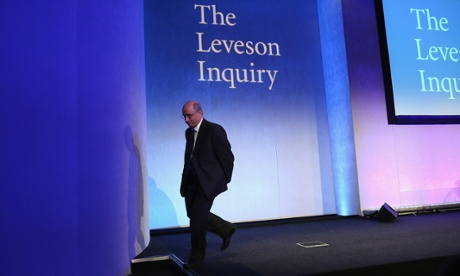
It is certainly a change from the usual basis of English legal proceedings. These are “adversarial” – each side presents its case, and the judge or arbitrator chooses which argument he prefers and rules accordingly. This is usually distinguished from the inquisitorial process followed in continental and other civil law jurisdictions, in which the judge or arbitrator takes an active role investigating the facts and applying the law.
Today, however, this is a fuzzy distinction. In small claims and other cases where one party is not legally represented, English judges necessarily act inquisitorially. This is especially true in arbitration, and the Arbitration Act 1996 (s. 34(2)(g)) specifically gives arbitrators the discretion to conduct proceedings on an inquisitorial basis. This discretion is balanced by statutory safeguards: for example, if the arbitrator exceeds his authority or does not follow due process, his award can be challenged in court. Parties to the Leveson scheme can therefore be confident that, even without any new legislation, there is a statutory framework for the arbitration process.
However, those responsible for the scheme will have to overcome some very real practical problems. An inquisitorial system places greater responsibility on the arbitrator. This will be particularly the case in the Leveson scheme, under which members of the public, often without the benefit of independent legal advice, will bring claims against the national newspapers.
The whole point of the scheme is to ensure access to justice by equalising the imbalance of power between the press and the public. But this may well result in the arbitrator assuming what would, in usual English legal proceedings, be the role of the claimant’s lawyer. For example, the arbitrator will need to consider what disclosure orders should be made against the newspaper, identify the legal arguments in favour of the claimant and question the newspaper’s witnesses.
That will leave the arbitrator open to allegations of bias – most obviously in favour of the claimant, but also potentially in favour of the newspaper if he fails to be sufficiently inquisitorial. The issue will be compounded if practicing media lawyers, who have a track record of acting either for or against newspapers, are appointed as arbitrators. The newspapers are likely to be particularly concerned that claimants will be able to bring arbitration claims on a “cost free” basis (i.e. with the newspaper paying), in which the arbitrator deciding their case also adopts a quasi-prosecutorial role.
This problem can be solved by the careful selection of arbitrators and by those arbitrators’ careful management of the arbitration procedure. Providing arbitrators take pains to ensure that, whilst being inquisitorial, they remain even-handed and allow the parties to present their case and comment on the arbitrator’s findings, due process should be upheld. Nevertheless, forcing media claims such as defamation, which until recently remained the only civil claim to benefit from a full jury trial, into this scheme is as radical a change as anything Lord Justice Leveson has proposed.
Ned Beale and Cara Gillingham, Trowers & Hamlins LLP