

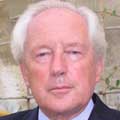
Since his appointment Mr Justice Eady has given a large number of judgments in high-profile libel and privacy cases. In 2011 he featured at number 17 in the MediaGuardian’s 100 most powerful people in media, the paper suggesting that his rulings had “shaped UK libel and privacy law, and in the process made him the country’s most controversial high court judge”.
His ‘Greatest Hits’ in the Privacy Charts have included:
- McKennitt v Ash [2005] EWHC 3003 where Eady J found in favour of the folk singer, Loreena McKennitt, who claimed that her former friend, Niema Ash, had breached her confidence and privacy in her book entitled (somewhat ironically) “Travels with Loreena McKennitt: my life as a Friend”. His judgment contains a detailed examination of various passages in the book and an assessment of whether or not they can be considered to give rise to a ‘reasonable expectation of privacy’ holding that the issue of whether the information is true or false is irrelevant to that inquiry. His decision was upheld on appeal with both Buxton LJ and Longmore LJ paying tribute to his ‘careful and correct’ judgment and his handling of the case.
- Mosley v News Group Newspapers [2008] EWHC 1777 (QB), in which Eady J awarded £60,000 damages to Max Mosley for breach of privacy by the News of the World for their ‘exclusive’ about his participation in a BDSM orgy. This decision led to a stinging (and, to anyone with any understanding of the law, completely unjustified) attack by Paul Dacre during his speech to the Society of Editors in 2008, where he claimed:
“The British press is having a privacy law imposed on it, which apart from allowing the corrupt and the crooked to sleep easily in their beds is, I would argue, undermining the ability of mass-circulation newspapers to sell newspapers in an ever more difficult market. This law is not coming from parliament. No, that would smack of democracy, but from the arrogant and amoral judgments, words I use very deliberately, of one man. I am referring, of course, to Justice David Eady who has, again and again, under the privacy clause of the Human Rights Act, found against newspapers and their age-old freedom to expose the moral shortcomings of those in high places.”
This, in turn, produced a letter to the Times in defence of the judge from four leading libel silks.
- CTB v NGN [2011] EWHC 1232, in which Eady J prevented publication of the name of Ryan Giggs as the premiership footballer who had been in a relationship with Imogen Thomas. In his judgment Eady J responded to critics who claimed that judges were “introducing a law of privacy by the back door”, noting that the principles were readily apparent from the Human Rights Act and the content of the European Convention and that when the Bill was before the House of Lords in 1997 the then Lord Chancellor expressly acknowledged that any privacy law developed by judges would be a better law as it would have to balance Articles 8 and 10 ECHR.
Other privacy cases have included Lord Browne v Associated Newspapers [2007] EWHC 202 (QB) where he granted an injunction to prevent the publication of certain private information relating to the then Group Chief Executive of BP’s relationship with his former partner, Mr Chevalier (his decision was, in the main, upheld on appeal). And OPQ v BJM [2011] EWHC 1059 (QB) in which he again redefined the boundaries relating to Article 8, granting a contra mundem injunction to protect the Claimants’ right of privacy in a “straight forward and blatent blackmail” case, where there was solid evidence about the state of heath of the Claimants and the extremely negative consequences publication would entail.
Mr Justice Eady has been equally instrumental in shaping the landscape of libel jurisprudence.
In Lillie & Reed v Newcastle City Council [2002] EWHC 1600, following a 6 month trial, he found two nursery workers, Dawn Reed and Christopher Lillie had been libelled in a Report commissioned by the Council which accused them of wide-scale sexual abuse of pre-school children. He awarded each of them £200,000 in damages, the highest award of damages available at that time. The judgment may not be the most widely read of his works: it is 281 pages long and runs to 1564 paragraphs. (The case is also notable as it was conducted by the Claimants’ legal team on CFAs, without which it would not have been possible for them to have brought the action.)
His judgment in British Chiropractic Association v Simon Singh [2009] EWHC 1101 (QB), received a great amount of publicity. Eady J held that Simon Singh’s article in The Guardian, which described the BCA claims that their members could cure children with colic, ear infections, asthma, sleeping and feeding conditions and prolonged crying even though there was not a jot of evidence and referred to them as “promoting bogus treatments”, contained statement of facts and not comment. The Court of Appeal allowed the appeal by Singh holding that “not a jot of evidence to support the BCA’s claims” was a statement of opinion, and one backed by reasons.
Eady J’s has given a number of judgments in cases involving the Reynolds defence. He found for George Galloway in his libel trial against the Telegraph which had accused him of being “Saddam’s little helper” and in Saddam’s pay. His decisions in Lukiowiak -v- Unidad Editorial SA (finding Reynolds did apply to a book alleging the claimant had shot an Argentinean soldier on the day the Argentineans surrendered) and in Roberts v Gable [2006] EWHC 1025 (QB) (where he held that reportage qualified privilege did apply to the allegations in the Searchlight magazine about the Claimant BNP supporters) were both upheld on appeal. However, in Jameel v Wall Street Journal [2006] UKHL 44 he was described by Lord Hoffmann as being “hostile to the spirit of Reynolds” and his finding in favour of the Saudi Arabian businessman was reversed, the House of Lords finding that qualified privilege did apply.
Eady J heard the first cases on Offer of Amends under s2-4 of the Defamation Act 1996. Milne v Express Newspapers [2002] EWHC 2564 (QB), Cleese v. Clark [2004] EMLR 37 and Nail v NGN and others [2004] EWHC 647 (QB). The principle that publishers should be given a ‘healthy discount’ as a reward for making an offer was established. His ruling in Nail was upheld on appeal. Other notable Offer of Amends cases include Winslet v Associated Newspapers [2009] EWHC 2735 where he found that the court did have power to order a statement in open court under the offer of amends regime in Kate Winslet’s case and Turner v NGN [2005] EWHC 892 where the newspaper had falsely claimed that Mr Turner pressurised his wife into having sex with other men and a discount of 40% was applied under the offer of amends regime.
In addition, Sir David Eady has given a number of thoughtful and penetrating lectures and talks dealing with the law of libel and privacy. These include:
- Speech at the University of Hertfordshire [pdf], 10 November 2009
- Privacy and the press: Where are we now? [pdf] 1 December 2009
- Speech on Launch of new “Centre for Law, Justice & Journalism” [pdf] 10 March 2010
- How Private is “Private”? [pdf] 8 October 2011