

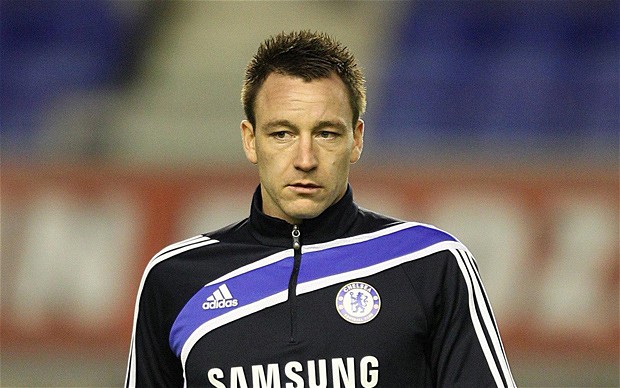
The England football captaincy is regarded as an important and significant office by the law as well as the media. Back in September 2011, a claim by Rio Ferdinand arising out of the publication of an article about his communications with a former girlfriend ([2011] EWHC 2454 (QB)) was defeated in part by the public interest arising as a result of Mr Ferdinand’s
“appointment as captain of England, first, on a temporary basis, in March 2008 and then in replacement of John Terry in February 2010” [87]
This was, of course, the result of an earlier privacy case involving John Terry (Terry v Persons Unknown [2010] EMLR 16) – which led to John Terry being removed from the post of England football captain. This was the great media law story of early 2010 – we had a Round Up of the coverage (and a sequel) at the time.
But back to the Ferdinand case. In reaching his conclusion on public interest Mr Justice Nicol was strongly influenced by the fact that
“[Mr Ferdinand] voluntarily assumed the role of England captain. It was a job that carried with it an expectation of high standards. In the views of many the captain was expected to maintain those standards off, as well as on, the pitch.” [89]
It is not entirely clear where these “expectations of high standards” come from – indeed, experience might well suggest an expectation to the opposite effect.
One place this “expectation” does not derive from is the Laws of Football. A curious and little discussed feature of all this is that the captain has, in fact, almost no formal role in a football team. The “captain” is mentioned only three times in the Laws of Football – twice in relation to penalty shoot outs and once in “Law 12 – Fouls and Misconduct” which tells us that
“The captain of a team has no special status or privileges under the Laws of the Game but he has a degree of responsibility for the behaviour of his team”.
“No special status or privileges” under the Laws of the Game. The words bear repeating. The lack of importance of the role is emphasised by the words “a degree of responsibility” – in other words, a vague and undefined “responsibility” – in truth none at all.
The formal role of the football captain on the field of play is a very minor one – contrary to some accounts he is not actually required to participate in the “coin toss” at the beginning of the game. The captain is wheeled out at press conferences. But there is no reason why both these roles have to be fulfilled by the same person for each match – and no reason why different players could not perform the roles from week to week. They could quite easily be fulfilled by each member of the team in rotation.
Whatever the England football captaincy is, it is certainly not a “public office” or a position which carries with it any public duties or responsibilities relevant to the proper functioning of a democratic society.
In short, the captain of the England team is whatever the manager – and the media – choose to make him. His status as a “role model” is a self-confirming media construct – the media say he’s a role model so he is. This then gives the media a handy stick to beat the person who has not lived up to the standards which they themselves have invented.
John Terry was accused of a criminal offence and it might be thought that he was innocent until proven guilty. The accusation seems unlikely to have affected his ability to deal with penalty shoot outs and if there was a problem about press conferences then doubtless someone else could have attended.
The identity and personal qualities of the holder of the “office” of England football captain are undoubtedly subjects in which the media – and some sections of the public – are interested in. It is, however, difficult to see how these matters have any wider significance and how media discussion of them can make any contribution to a debate of general interest. Perhaps the best thing to do would be to leave the England football captain to his proper job of playing football – his onfield performance can properly be criticised and dissected, the rest of his life could sensibly be left alone.