

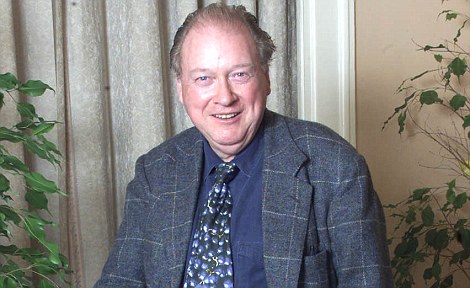
In addition, Lord McAlpine was entitled to substantial damages to compensate him for the remaining damage to his reputation, his distress at the accusation and to provide him with “vindication”. The BBC has agreed to pay him £185,000 – a sum which seems well in excess of the “going rate” that would be awarded by a court. It appears that this week the BBC will join in a “Statement in Open Court” to further express its regret and apologies.
However, it is clear that Lord McAlpine is not satisfied with the apologies and compensation he has received from the BBC but intends to pursue ITV “for £500,000” and to bring claims against “10,000 Twitter users“.
In relation to ITV, the Times reports [££]
A spokesman for Lord McAlpine said it was “quite clear” that ITV would have to pay significantly more after Phillip Schofield, the co-host of This Morning, handed David Cameron live on air a list of names of alleged abusers that was briefly visible to viewers.
Lord McAlpine’s spokesman said that the peer had restricted the demand for compensation from the BBC because he was conscious that licence-payers’ money was involved. The same situation did not apply to his action against the commercial broadcaster.
“This was also done in broad daylight in a premeditated way in front of the Prime Minister,” the spokesman said. “It was that programme that prompted Lord McAlpine to come out with his statement.””
This is an interesting claim – it is not clear whether any viewers could see Lord McAlpine’s name on the infamous “list” handed to David Cameron. If not, it is difficult to see how a claim could be maintained.
In relation to Twitter, it is reported that “ordinary people” involved “are likely to be asked to pay a nominal sum of between £5 and £100 to a children’s charity if they approach Lord McAlpine’s legal team and apologise“. This is doubtless reassuring to hasty tweeters although there does not appear to have been an official statement to this effect from Lord McAlpine’s representatives (and there are likely to be claims for legal costs as well).
Update: According to today’s Independent Lord McAlpine’s solicitor, Andrew Reid, has said that
“those with under 500 followers will be asked to make a donation to charity as part of a settlement, with an “administration fee” for sorting it out. He added that higher profile figures, such as Ms Bercow, are ‘a separate matter'”.
Lord McAlpine can obviously pursue claims against anyone he believes has damaged his reputation. But what, in law, is he entitled to?
As we have said, there is a strong argument that his reputation has now been restored and that he has been fully compensated by the BBC. As was mentioned in an earlier post, the effect of section 12 of the Defamation Act 1952 is that, in any action by Lord McAlpine against a tweeter the sum paid in settlement by the BBC (and ITV if they also settle) can be taken into account. The general view is that this provision does not extinguish the damages payable in other actions but it does have the effect of substantially reducing them. If, as suggested above, the additional damage to reputation caused by an particular “Tweet” is negligible then the damages should, indeed, be limited to the £5 to £100 mentioned.
Three further points can be made in relation to claims against those who made injudicious tweets.
First, a tweeter will only be liable if he or she identified Lord McAlpine as the person mentioned in the Newsnight broadcast (or, as appears to be the case in relation to some, even worse, as “a paedophile”). Raising a question such as “what is the story about Lord McAlpine?” is not defamatory.
It is, however, possible to defame by means of an “innuendo” – this has a technical meaning in the law of libel, it means that words used which, on their face are innocent, can become defamatory as a result of facts known to some of those to whom they are published. For example, in the present case it would be defamatory to tweet “Lord McAlpine was the man named on Newsnight” because all or most of the readers of such a tweet would know what Newsnight had alleged.
Second, although to repeat someone else’s libel is itself defamatory (“Mr X says that Lord McAlpine is the man on Newsnight“) a person who repeats an allegation without adopting it as true could have what is called a “reportage defence” (see our post here). Australian academic Jason Bosland has summarised this as follows
“The ‘doctrine of reportage’ …essentially provides a defence for the republication of allegations originally made by a participant to a dispute or controversy of public interest. Repeating a defamatory allegation, subject to any other defence, would usually give rise to liability on the part of the republisher. Under the reportage defence, however, liability will be avoided where the republisher does not adopt or present the repeated defamatory allegation as fact, but instead simply republishes the allegation as part of a story that has the effect of reporting, in the public interest, the fact that the allegation has been made”.
In other words, someone who tweeted “Many have identified Lord McAlpine as the subject of the Newsnight broadcast” might well have such a defence.
Third, anyone who tweeted anything about Lord McAlpine would do well to apologise to him at the earliest possible moment. This mitigates any possible further damage. A tweet along the lines of:
“I apologise for mentioning Lord McAlpine in connection with Newsnight. These allegation are false and have nothing to do with him at all”
can do no harm. A further apology can always be made if necessary.
Update: As pointed out in today’s Independent any further comment may aggravate rather than mitigate damage. Sally Bercow’s tweet. “His lawyers ambulance chasers tbh #bigbullies” may fall into that category.
Update: In relation to to apologies on twitter, we are reminded of a June 2011 story where, in Malaysia, Fahmi Fadzil, an opposition politician’s aide agreed to apologise 100 times on Twitter over the course of three days. Each post reads: ‘I’ve DEFAMED Blu Inc Media and Female Magazine. My tweets on their (human resource) policies are untrue. I retract those words and hereby apologise.’ Perhaps a similar approach might be used in the present case.
One final thought. The purpose of a defamation action is to restore the reputation of a defamed claimant and compensate for damage to reputation and distress. However, a time must surely come what this objective has been achieved – when full compensation has been paid and everything reasonably possible has been done to restore the claimant’s reputation. When this position is achieved then any further action would be pointless and would arguably be an abuse of the process of the court. If Lord McAlpine were to pursue claims against ITV and 10,000 users of Twitter and if further apologies and substantial settlements were forthcoming then a time may come fairly quickly when there is nothing further to be gained from any litigation and the court may be persuaded to intervene.