

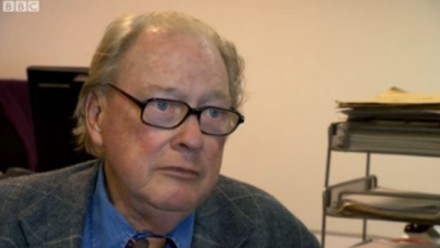
The apology did not undo the damage caused – and certainly did not remove the obvious and serious distress suffered by Lord McAlpine over the past two weeks. He was, in accordance with very well established principles of English law, entitled to substantial damages. The BBC was, understandably, anxious to settle his claims as quickly as possible and, on 15 November 2012, it was announced that it had agreed to pay him damages of £185,000, plus costs.
Was this an appropriate figure for the wrong which was done? There are, of course, many different views as to what sums should properly be paid in libel damages. In the United States they are often in the millions of dollars, while in France or Germany the sums awarded may be in the few thousands of euros. In England and Wales libel damages are awarded on a “conventional scale” in between the two extremes.
Different views can reasonably be taken but looking at the case in terms of the established principles of libel damages there is a strong argument that the BBC have agreed to pay more than an English court would have been likely to award.
Libel damages are “at large” – their assessment depends on looking at all the circumstances, it is not “quasi scientific”. Nevertheless, two points are very clear.
First, libel damages are subject to a “ceiling figure” which is currently “of the order of £275,000” (see Cairns v Modi [2012] EWCA Civ 1382 [25]). This is the highest sum that a libel court can award – for the worse possible libel with the most serious “aggravating features”.
Second, that when a publisher makes a prompt apology and correction this has the effect of substantially reducing the sum of damages awarded. Where there is an early apology and correction there “is bound to be substantial mitigation” of damage:
“The defendant has capitulated at an early stage without pleading any defence, has offered to make and publish a suitable correction and apology … and has offered to pay proper compensation and costs … The claimant knows that his reputation has been repaired to the full extent that that is possible. He is vindicated. He is relieved from the anxiety and costs risk of contested proceedings. His feelings must of necessity be assuaged, although they may still remained bruised (and he is still entitled to say so, if that is so). He can point to the agreed apology to show the world that the defamation is accepted to have been untrue and unjustified” (Nail v News Group Newspapers Ltd [2005] 1 All ER 1040 [41]),
The defendant who makes an early correction and apology is entitled to a “healthy discount” on the damages which would otherwise be payable. The Courts typically discount the damages by 50% in these circumstances (see, for example, the recent case of Cairns v Modi [2012] EWCA Civ 1382).
Lord McAlpine’s was a case of the most serious libel but one which was published in unusual circumstances: to a wide audience but without express identification. There a two possible arguments as to how the non-identification should affect an award of damages.
The first argument would be that it meant that an award at the very top end of the scale was not appropriate. The BBC did not make the allegation against Lord McAlpine expressly but he was identified by some, but by no means all, of the programme’s viewers. This argument might lead a Court to adopt a lower starting point for assessment. Thus in the recent case of KC v MGN [2012] EWCA Civ 1382) the defendant published a false allegation of rape of a 14 year old girl against the (unnamed) “father of Baby P”, the anonymised claimant “KC”. The Court of Appeal reduced the Judge’s “starting point” of £150,000
“to a level which, consistently with the limited publication and early apology, would nevertheless adequately reflect the abhorrent nature of the crime falsely alleged against KC and the damage done to and its impact on him. A proportionate figure for this purpose is £100,000” [49]
It could be said that, in the similar circumstances of the McAlpine case – serious allegation without express identification and early apology – a similar starting point would be appropriate.
The second, contrary, argument does, however, have considerable force. The BBC did broadcast a programme which, foreseeably, led many people to identify him. There is a strong argument that the broadcasters should have foreseen that this would be the consequence of the Newsnight programme and so should, in law, be responsible for the wide republication of the allegation on the internet. It could then be argued that the fact that only a relatively small number would have identified Lord McAlpine at the time of the broadcast should not reduce the damages. As the Court of Appeal said recently in the “Twitter libel” case of Cairns v Modi ([2012] EWCA Civ 1382).
“we recognise that as a consequence of modern technology and communication systems any such stories will have the capacity to “go viral” more widely and more quickly than ever before. Indeed it is obvious that today, with the ready availability of the world wide web and of social networking sites, the scale of this problem has been immeasurably enhanced, especially for libel claimants who are already, for whatever reason, in the public eye. In our judgment, in agreement with the judge, this percolation phenomenon is a legitimate factor to be taken into account in the assessment of damages” [27].
In other words, there is a respectable argument that the starting point for the assessment of Lord McAlpine’s damages should be a figure at the very top of the scale, say £275,000.
But once the “starting point” is ascertained, the effect of the “mitigation of damage” resulting from the early correction and apology must be considered. Although many people would not have seen the Newsnight broadcast and would not have understood it to refer to Lord McAlpine, all newspaper readers and television viewers will be aware of the retraction. Lord McAlpine had received the fullest vindication – his reputation has been repaired to the fullest extent possible. As a result, the “starting figure” for damages must be subject to a “healthy discount”. In the circumstances, a court would be expected to reduce the damages by 50%.
So, if the first argument set out above is accepted the appropriate award of damages would be £50,000 – that is, 50% of the “starting figure” of £100,000. If the second argument is accepted, then the appropriate award would be £137,500 – that is, 50% of the maximum possible award of £275,000. It could be argued that a reasonable compromise figure would be somewhere in between the two: £93,750.
In short, the figure paid by the BBC in settlement is substantially higher than the largest sum that a court could properly award to Lord McAlpine. Although the BBC’s desire to achieve a quick settlement is understandable, it is perhaps surprising that it has chosen to pay a sum of money which is substantially greater than the sum which a court would have been likely to award.
Finally, a footnote concerning the claims which Lord McAlpine is said to be launching against those who Tweeted his name, linking him to defamatory allegations. By section 12 of the Defamation Act 1952
In any action for libel or slander the defendant may give evidence in mitigation of damages that the plaintiff has recovered damages, or has brought actions for damages, for libel or slander in respect of the publication of words to the same effect as the words on which the action is founded, or has received or agreed to receive compensation in respect of any such publication.
This means that, in any action by Lord McAlpine against a tweeter the sum paid in settlement by the BBC can be taken into account. It could be argued that, as the BBC had paid such a substantial sum to compensate Lord McAlpine for the damage to his reputation, the damages payable by those tweeting the same allegation should be very modest. It will be interesting to see whether and to what extent this point is taken by any tweeters sued by Lord McAlpine.